

Sustainable Furniture Guide Eco Friendly Materials Ethical Sourcing and Smart Supplier Choices

A beautiful room should not come at the planet’s expense. Furniture is often one of the biggest, longest-lasting purchases in a home, yet it can also carry a hidden cost through deforestation, waste, high-emission materials, poor labour practices, and short product lifespans.
Sustainable furniture offers a better path. It brings together thoughtful design, responsible materials, ethical sourcing, and durability. The result is furniture that looks good, works hard, and leaves a lighter footprint.
This guide explains the main benefits of sustainable furniture, the materials worth knowing, and how to compare suppliers with confidence, whether shopping online, visiting a showroom, or looking for makers across the UK, including areas such as Cheshire, Staffordshire, Manchester, Birmingham, and Crewe.

Why sustainable furniture matters
Furniture affects more than the look of a room. It shapes how resources are used, how workers are treated, and how much waste ends up in landfill.
Many conventional pieces are made for speed and low cost. They may use virgin timber from poorly managed forests, synthetic foams, solvent-heavy finishes, and composite boards that are hard to recycle. If the furniture breaks after a few years, the cycle starts again.
Sustainable furniture takes a longer view. It asks better questions.
Where did the material come from?
Was it harvested, made, and transported responsibly?
Can the item be repaired?
Will it age well?
What happens at the end of its life?
The best choices do not need to be perfect. They need to be better, more transparent, and built to last.
The benefits go beyond the environment
An eco-conscious purchase can improve the home in several practical ways.
Better durability
Many sustainable makers focus on solid construction, repairable joints, and timeless forms. A solid oak dining table, for example, can often be sanded and refinished rather than replaced.
Healthier interiors
Low-VOC finishes, natural fibres, and safer adhesives can help reduce indoor pollutants. This is especially helpful in bedrooms, nurseries, and homes with limited ventilation.
Less waste
Reclaimed timber, recycled metal, recycled plastic, and reused textiles keep valuable materials in circulation.
More character
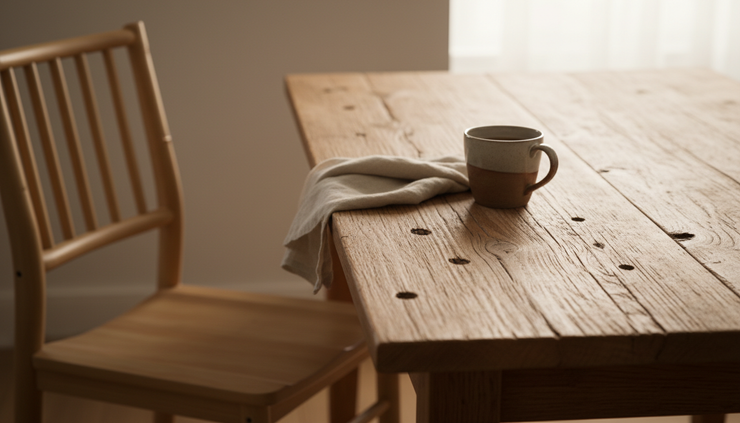
Reclaimed wood may show nail marks, varied grain, or colour changes. These details give furniture a sense of history that flat-pack pieces often lack.
Support for responsible businesses
Choosing suppliers with clear sourcing policies supports makers, workshops, and retailers trying to improve how furniture is produced.
Eco-friendly materials to know before shopping
Not all “green” furniture is equal. The material matters, but so does how it is grown, harvested, processed, transported, and finished. A sustainable material used badly can still become a poor choice.
Here are the main options to look for.
Reclaimed wood
Reclaimed wood comes from previous use, such as old flooring, beams, barns, factories, boats, or construction waste. Instead of cutting down new trees, makers give existing timber a second life.
It works well for:
Dining tables
Shelving
Bed frames
Sideboards
Coffee tables
Kitchen stools
The appeal is both environmental and visual. Reclaimed wood often has depth and variation that new timber cannot easily copy. It can suit rustic, industrial, farmhouse, and modern interiors, depending on the finish.
When buying reclaimed wood furniture, ask whether the timber has been checked, cleaned, dried, and treated properly. Poorly prepared wood may warp or carry old contaminants. A good supplier should explain the process clearly.
Bamboo
Bamboo is technically a grass, not a tree, and it grows quickly compared with many hardwoods. This makes it a popular choice for sustainable furniture and homewares.
It appears in:
Chairs
Shelving
Bedside tables
Lampshades
Room dividers
Cabinets
Tabletops
Bamboo can be strong, light, and elegant. It often suits minimalist, Japandi, Scandinavian, and natural interiors.
The key is to check the manufacturing method. Bamboo furniture may use adhesives, laminates, or finishes, so look for suppliers that describe low-toxicity glues and responsible production. Bamboo that travels long distances may still be a reasonable choice, but durability becomes even more important. The longer the piece lasts, the better the environmental value.
Recycled metal
Steel and aluminium can often be recycled without losing much quality. Recycled metal furniture is strong, useful indoors and outdoors, and usually easy to maintain.
Common examples include:
Dining chair frames
Outdoor tables
Shelving units
Bed frames
Cabinet handles
Side tables
Metal can look sleek, industrial, or understated. It also pairs well with reclaimed timber or recycled glass.
Check whether the supplier states the recycled content and whether the item can be disassembled. Mixed materials are sometimes harder to recycle at the end of their life, especially when glued together.
Recycled plastic
Recycled plastic can be a smart option when used well. It is common in outdoor chairs, benches, children’s furniture, and modern accent pieces.
Its biggest strength is weather resistance. Outdoor furniture made from recycled plastic can reduce demand for virgin plastic while offering long service life.
Look for thick, sturdy construction rather than flimsy moulded parts. A cheap recycled plastic chair that cracks quickly is not truly sustainable. A well-made bench that lasts for years is a far better choice.
Natural fibres and responsible upholstery
Sofas, armchairs, headboards, and dining chairs bring another layer into the decision. Upholstery can include fabric, foam, springs, timber frames, webbing, glue, buttons, and thread.
Better options include:
Organic cotton
Linen
Hemp
Wool
Recycled polyester
Cork leather alternatives
Plant-based or lower-impact foams where available
Wool is durable, naturally fire-resistant, and widely used in high-quality upholstery. Linen and hemp offer texture and strength. Recycled polyester can make use of plastic waste, though it remains synthetic and may shed microfibres, so quality and longevity matter.
For sofas and armchairs, ask about the frame as well as the fabric. A responsibly upholstered chair loses its edge if the frame is weak and cannot be repaired.
Ethical sourcing is just as important as material choice
Eco-friendly furniture is not only about what a piece is made from. It is also about who made it, how they were treated, and how honest the supplier is about the journey from raw material to finished product.
Ethical sourcing covers several areas.
Responsible forestry
For new timber, look for evidence that forests are managed responsibly. In the UK, shoppers often see certifications such as FSC or PEFC. These schemes aim to support better forestry practices, though no label replaces good questions and supplier transparency.
A responsible supplier should be able to say:
What timber species the item uses
Where the timber came from
Whether certification applies
Whether the wood is solid, veneered, or engineered
How the finish has been applied
Avoid vague claims such as “eco wood” without detail.
Fair labour and safe workshops
Ethical furniture should not rely on unsafe working conditions or unfair pay. Large global supply chains can be hard to trace, but better suppliers publish policies, name production regions, and work with audited factories or known makers.
Small local workshops may not have glossy sustainability reports, but they can still be ethical. In fact, they may offer direct, clear answers about materials, waste, repair, and labour.
Good signs include open workshop information, maker profiles, long product guarantees, repair services, and clear aftercare advice.
Honest claims
Greenwashing is common in interiors. Words such as “natural”, “conscious”, “earth-friendly”, and “sustainable style” can sound convincing while saying very little.
Trust specifics over slogans. A supplier that says “made from 80 per cent recycled aluminium” gives more useful information than one that says “planet-positive design” with no proof.
Types of sustainable furniture for every room
Sustainable furniture is no longer limited to rustic tables and handmade stools. There are options for almost every room and design style.
Living room furniture
For the living room, look for durable sofa frames, removable covers, repairable legs, and recycled or natural fabrics. A sofa is a high-use item, so longevity matters more than trend-led design.
Good choices include:
Sofas with replaceable covers
Reclaimed wood coffee tables
Recycled metal side tables
Modular shelving made from certified timber
Vintage or restored armchairs
Vintage furniture can be one of the most sustainable options of all. The environmental cost of making it has already been paid, and many older pieces were built with repair in mind.
Dining furniture
Dining tables and chairs take daily wear, so strong materials pay off. Reclaimed timber tables are popular because scratches and marks often add to their character.
For chairs, check the joints, seat comfort, and whether parts can be tightened or replaced. Bamboo chairs and recycled metal frames can work well if they feel stable and well finished.
Bedroom furniture
In the bedroom, low-toxicity finishes and natural materials matter. Bed frames, wardrobes, chests of drawers, and bedside tables sit close to where people sleep, often in rooms with closed windows.
Look for solid wood, responsibly sourced timber, natural oils, water-based finishes, and clear information about adhesives.
Outdoor furniture
Outdoor pieces face rain, frost, sun, and temperature changes. Durability is the main test.
Sustainable garden furniture may use:
Recycled plastic lumber
Recycled aluminium
Certified hardwood
Locally made timber benches
Reclaimed scaffold boards for tables
Choose materials suited to the UK climate. A beautiful chair that needs constant treatment may not be the most practical option for a damp garden.

How to choose the right sustainable furniture supplier
The supplier matters as much as the product. A good supplier helps separate meaningful sustainability from surface-level marketing.
Look for clear product information
A trustworthy supplier gives practical details without making shoppers chase them.
Look for information on:
Materials and finishes
Country or region of manufacture
Certifications where relevant
Recycled content
Care instructions
Repair options
Delivery packaging
Returns and end-of-life guidance
If a product description only talks about style, colour, and “eco appeal”, ask for more.
Ask direct questions
Good suppliers welcome informed questions. Before buying, especially for larger pieces, ask:
What is this piece made from?
Is the timber reclaimed, certified, or traceable?
Are the finishes low-VOC?
Can parts be repaired or replaced?
How long should the item last with normal use?
Is the packaging recyclable or reusable?
Do you offer spare parts, reupholstery, or refinishing advice?
The quality of the answer tells you a lot. Clear, calm detail is a good sign. Vague promises are not.
Compare local, national, and specialist suppliers
Different suppliers bring different strengths.
Local makers and workshops
Nationwide sustainable retailers
Vintage and restoration sellers
Specialist material suppliers
Good for bespoke dimensions, repair advice, shorter transport routes, and direct knowledge of materials.
Useful for broader choice, consistent delivery, returns policies, and product ranges across several rooms.
Ideal for unique pieces, lower material impact, and furniture with character.
Best for items such as bamboo furniture, recycled plastic outdoor pieces, or reclaimed industrial timber.
For homes in and around Cheshire, Staffordshire, Manchester, Birmingham, and Crewe, it can be worth mixing sources. A reclaimed dining table from a nearby maker, a restored sideboard from a vintage seller, and a recycled metal shelving unit from a national retailer can all sit happily in the same home.
Check delivery and packaging
Sustainability does not stop at the workshop door. Large furniture creates delivery impact, especially if items travel long distances or arrive wrapped in layers of plastic.
Look for suppliers that:
Use recyclable or minimal packaging
Group deliveries efficiently
Offer local delivery where possible
Take packaging back for reuse
Avoid unnecessary foam and plastic wrap
This is not always perfect, especially for fragile items. Still, a supplier that has thought about packaging usually says so.
What to look for in the furniture itself
Once the supplier checks out, inspect the piece. Sustainable furniture should still be comfortable, practical, and suited to daily life.
Strong construction
Look at joints, frames, fixings, and weight. A chair should not wobble. A drawer should move smoothly. A table should feel stable.
For wooden furniture, traditional joinery, solid frames, and well-fitted panels are positive signs. For upholstered furniture, ask about the frame material and whether the seat cushions can be replaced.
Repairable design
Repairability is one of the strongest markers of sustainable design.
Prefer furniture with:
Screwed parts rather than permanently glued parts
Replaceable covers or cushions
Refinishable surfaces
Standard fixings where possible
Available spare parts
A piece that can be repaired once or twice may stay in use for decades.
Timeless style
Trends fade quickly. A bright colour or unusual shape can be wonderful if it genuinely suits the home, but avoid buying purely because something is fashionable.
Timeless does not mean boring. It means the piece has enough quality, proportion, and usefulness to stay welcome as the room changes.
Honest finishes
Finishes protect furniture, but some contain harsh solvents or create surfaces that cannot be repaired easily. Look for water-based lacquers, natural oils, waxes, and low-VOC finishes where suitable.
Ask how to care for the surface. If a supplier cannot explain basic maintenance, the product may not have been designed with long-term use in mind.

A simple buying checklist
Before placing an order, run through this quick checklist.
Material
Is it reclaimed, recycled, certified, renewable, or built from durable natural materials?
Sourcing
Does the supplier explain where materials and production come from?
Construction
Does the piece feel stable, well made, and suitable for everyday use?
Finish
Are paints, oils, lacquers, and adhesives described clearly?
Repair
Can covers, legs, cushions, hinges, or surfaces be repaired or replaced?
Packaging
Will the delivery avoid unnecessary waste where possible?
Longevity
Will this still suit the home in five or ten years?
End of life
Can the piece be reused, resold, repaired, recycled, or safely dismantled?
If a piece passes most of these checks, it is likely a stronger choice than a cheaper item with a short life.
Sustainable style works best when it is personal
The most sustainable furniture is the furniture people keep. That means it must fit real life, not just an ideal version of it.
A busy family kitchen may need a tough reclaimed table that welcomes scratches. A rented flat may benefit from modular shelving that can move easily. A compact terrace might suit a vintage drop-leaf table, a bamboo bench, or recycled plastic outdoor chairs that need little care.
The goal is not to create a perfect eco-home overnight. It is to make better decisions each time something needs replacing. Buy less often. Buy with more care. Choose suppliers that give clear answers. Favour materials with a lower impact and designs that can be repaired.
Sustainable furniture proves that good design and responsible choices can share the same room. Start with one piece that matters, ask sharper questions, and let the home become more thoughtful one purchase at a time.


Comments